From THE CITY OF OXFORD HIGH SCHOOL MAGAZINE VoL. LI, iii JULY 1959 No. 166
School Notes
The problem still in our minds is that of the future of the School.
In our March number we reported on the refusal of the Education Committee to countenance the ‘bilateral’ solution. The City Council then referred this back for some other solution to be sought. The local press had already pointed out that, if a two-stream school was too small to be efficient, the solution would be, if grammar school education were to be preserved as such, to amalgamate with another grammar school. The suggestion found fa favour in several quarters and the Secondary Sub-Committee put forward a proposal in principle that we and Southfield School should merge on the Southfield site, where acreage was still possible, and thus make a new three-stream Grammar School.
After much concern had been expressed by the Governors of both schools, and by the Old Boys and the Staffs, that a three-stream grammar school would solve neither our present problems nor the aspirations of a city of our size, the Education Committee approved in principle a four-stream school, subject to other safeguards about the methods of carrying out such a proposal. That this found favour with the City Council was shewn when, in confirming the Education Committee minute, an amendment directed that the new school should be ‘at least four streams’. It looks therefore as if the wishes of Oxford are for one large grammar school, and it is now a question of whether the building of a school is a practicable proposition. We shall still hesitate to discard the possibility of the original scheme of a 3-stream City of Oxford School on our own Marston Ferry site.
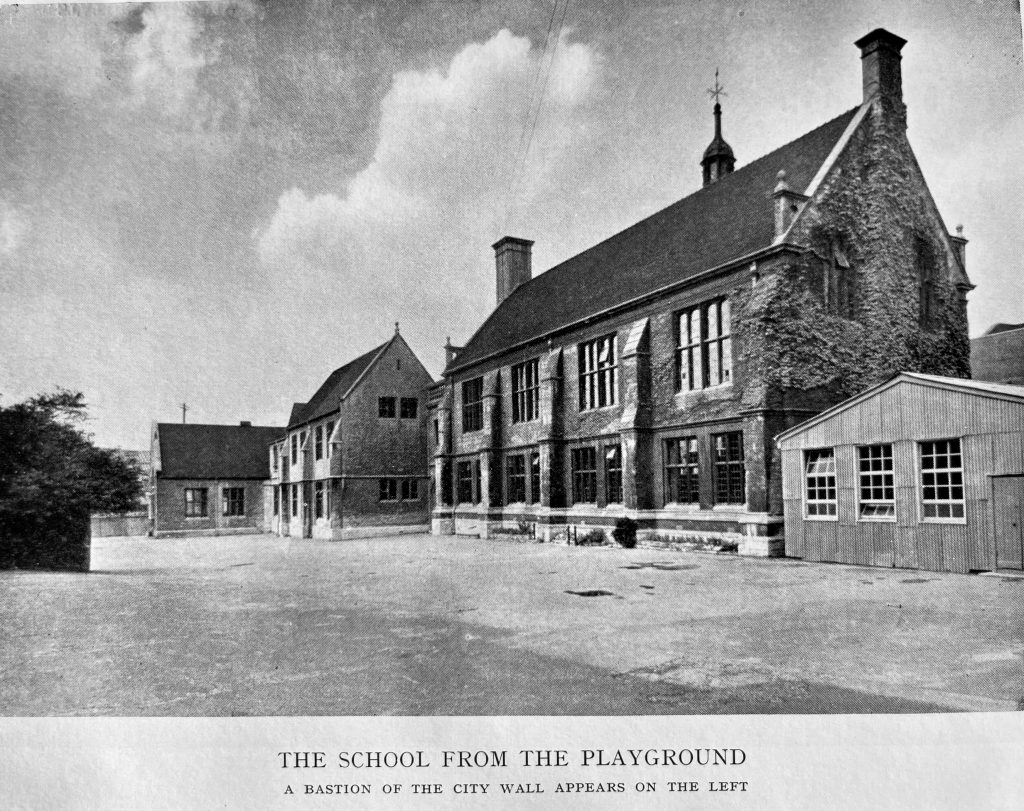
Sentimentally many would be upset at the passing of the building wherein T. H. Green and his co-workers brought to fruition the idea of secondary education and the ‘ ladder of learning’ that, in all probability, had a bearing on the subsequent Balfour Act of 1902. But Education is not a static thing. We must grow or perish; stagnation or starvation of what is needed nowadays would lead to death.
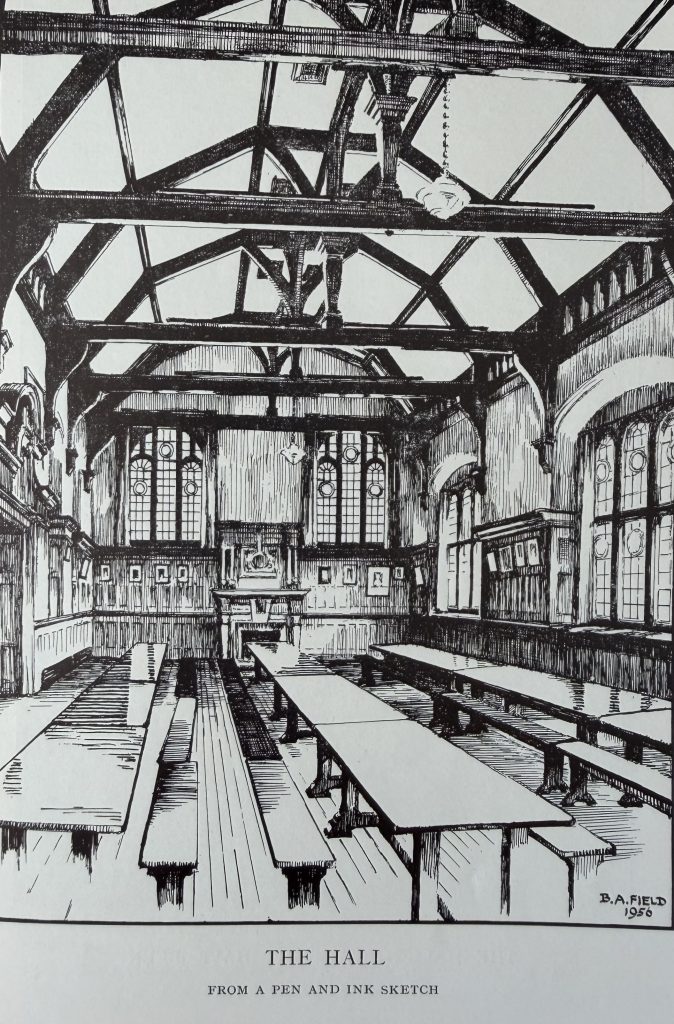
We have struggled with some considerable success to do all things for all in the Sixth Forms, but there are limits. A four-stream school would enable us to compete in a wider field where more differentiation would obviously be possible. Amenities too would come our way. A proper dining-hall and a Library, not to mention fives and squash courts and a swimming bath would become within our purview. A fine new assembly hall would house our ‘lares et penates’ in the shape of memorials and honours boards and preserve our continuity and traditions, reinforced by another school of equal size who would be welcome and, we understand, willing partners.