From THE CITY OF OXFORD HIGH SCHOOL MAGAZINE VoL. LVIII, iii JULY 1966 No. 186
Facsimıle: there appears below a reprint of the articles by Lord Salter in O.H.S. MAGAZINE, Nos. 1 and 2 (June and July, 1903).
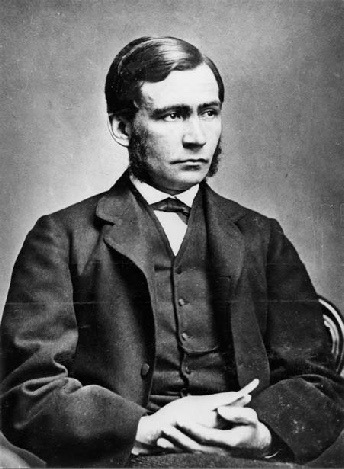
T. H. GREEN AND THE HIGH SCHOOL
It has been remarked of Prof. T. H. Green that though his own tutorial work was confined almost exclusively to the University, his strongest sympathies were always with school education. At different times in his life he was a member of the Governing Bodies of Firth College in Sheffield, the Wyggeston Schools in Leicester, and King Edward VI’s School in Birmingham. But more important, both as a public recognition of his work in this sphere and as a cause of his own increased interest in it, is the position he held in the Education Commission of 1864. During this and the two following years he was occupied in a personal inspection of the schools within five of the central counties of England. His work in Bırmıngham ıs still gratefully remembered, and its practical ettect still to be witnessed; while his reports, official and unofficial, of the facts and the impressions which his enquiries had given him, were of great value in directing the reconstruction of the educational system.
But it was characteristic of all his work that the width of his spheres of interest, so far from distracting his attention from more immediate objects, gave him a great zeal in their pursuit by charging them with a fuller meaning; and of the many projects which attracted his interest none ever secured such a whole- hearted allegiance as the ‘proposal to establish a new Grammar School or High School for the City of Oxford’. He was elected a member of the City Council with the special purpose of promoting this scheme; and in conjunction particularly with Ald. Galpin and Ald. Hughes, he worked constantly in the Council, in Committees, and by private influence. During the four years, 1877-81, which elapsed between the first public appeal to the citizens and the actual opening of the School; and the few months which elapsed between the opening and his own death, he not only furthered its success by generous gifts of f200 to the bulding fund and £1,000 for the fondation of a scholarship, but, still more, according to the testimony of those who worked with him, by giving his closest attention to every detail of school administration, and taking a personal interest in many of the boys. After his death the f1,600 subscribed by the University and City to found a memorial to him was, on the proposition of Prof. Jowett, devoted to the fondation of another scholarship; and the general feeling that the School held the first place in his interest was thus given a fitting and a per- manent expression.
But more interesting perhaps than this affection itself which he constantly displayed towards the School are the purposes and the Ideals which explain it, and the relation they bear to his whole life and character. No impression seems to have been stamped so indelibly upon the minds of those who witnessed the fondation of the School as one of great hopes and lofty ideals; and some of T. H. Green’s work makes very evident the source of much of their inspiration.
The very last public utterance of which any record is left to us was an adress delivered to the Wesleyan Literary Society on Dec. 19th, 1881, on the ‘Work to be done by the Oxford High School’. At that time the ideal of a ‘ladder of learning’ had already become a fruitful one in English education; but many rungs were still missing. It was still true that the educational system not only expressed existing social divisions, but created new ones, aggravated the differences and made the barriers more impassable; that the few great schools which had adopted the name-and, incident- ally, often the funds—which should have belonged to schools really open to the public, retained almost a monopoly in liberal education; for the great majority of English boys, and, till a few months before, notably for those of Oxford, there were neither means of access to these schools nor others to take their place. In Oxford too the urgency of the need was emphasised by the presence of the University. There had been a time, less than thirty years before, when the old restrictions closed the University absolutely against Nonconformists, and the inevitable expense of college life closed it practically against all poor men. But by this time the first restriction had been altogether removed by the act of 1853, and the second made much less absolute by the opening of pre- viously closed scholarships and the relaxation of the rule requiring residence in college; and the most fatal flaw in the ladder was now caused by deficiency not in wealth but in education. The immediate barrier to the son of an Oxford citizen was not so often an entrance fee as an entrance examination. The fault had ceased to be primarily that of the University, and the citizens had chiefly to blame themselves for the exclusion of their sons.
The immediate objects of the School were, therefore, to provide as liberal an education for those who were entering trades and professions as the ages to which they remained at school made possible; and to open a way to the University for all whom ability and interest qualified to use it.
But the address is remarkable, as indeed it is also characteristic, for the manner in which it intimately connects near and remote ideals, links the tangible to the intangible, and brings the glamour of distant promise to the dullness of present purpose; and indeed it is the light of the further beacon that appears to give at once its interest and its meaning to the nearer path. Illuminating and explaining these nearer objects of the High School are the two great ideals of Green’s social and civic life; the end of the ancient feud of University and City, and, more generally, of the bitterness of class feeling, of which that feud was one expression. If the sons of farmers, tradesmen, professional men and, in this instance, University tutors, were taught in the same school, not only, he thought, would there be a greater interchange of station, but even where the sons’ positions were those of their fathers the remem- brance of intimacy at school would make later distinctions less rigid. Above all, the association of a liberal education with wealth and birth would become less inevitable. ‘I confess to hoping for a time when the phrase “education of gentlemen” will have lost its meaning, because the sort of education which alone makes the gentleman in any true sense will be within the reach of all. As it was the aspiration of Moses that all the Lord’s people should be prophets, so with all seriousness and reverence we may hope and pray for a condition of English society in which all honest citizens will recognise themselves and be recognised by each other as gentlemen. If for Oxford our High School contributes in its measure, as I believe it will, to win this blessed result, some sacrifice of labour and money, even that most difficult sacrifice, the sacrifice of party-spirit, may fairly be asked in its behalf?
This is no place to attempt an estimate of the measure in which the immediate objects, and still less the more remote ideals, have yet been realised. Of the great majority of the boys who have passed through the School only too brief and imperfect a record has been kept—a defect which it is hoped this Magazine may in time do something to remedy. The more exact record of those who have passed from it to the University may yet be misleading. Their numbers must, as Green himself of course foresaw, be small in proportion to the whole body from which they were drawn. But their numbers and their direct personal influence alike represent very imperfectly the effect that they may well have had, for the most part indirectly, upon the relations between City and University; it is not merely those who pass from one to the other; it is not in itself the mere fact that the way is open; but it is the effect that the general realisation of this fact must have upon the conception of the University in the minds of those within and those without it alike. I proof is wanted of the real change of feeling, of which the School is of course only one though not a minor cause, it is only necessary to read the local newspapers of the time of its foundation. At the public meeting after Green’s death held to decide what would be the fittest memorial to him, it was remarked that the meeting itself was without parallel in the manner in which it united the University and City; and in the speeches that followed from the representatives of each it is not hard to trace a certain diffidence and even the hints of recent aloofness and antagonism, which make it evident that it was only a unique occasion, the wish to do honour to the memory of a unique man, that could have given them such unanimity of purpose and desire.
And indeed the report of this meeting gives the explanation, if any were wanted, of Green’s devotion to the welfare of the School; it is manifest from this, as it is from many other sources, that the ideals he conceived for the School were the ideals of his own life, and its work of a piece with his own. His own work was half in philosophy, and half in public life; but instead of living first in one and then in the other two exclusive spheres, he brought both into intimate and fruitful union. His philosophy is essentially one that looks at ordinary actions in the light of high and remote deals; and this relation is just that which exists also between his philosophy itself and his public life. It is this constant reference to remote ideals that gives an inevitable tinge of sadness to any retrospect of the School’s history; but to their union with nearer and more practical objects is due much of the success it has achieved. The more ultimate objects of the School, as he conceived them, both educational, and, through them, also social, were those which inspired most of his own work. In particular the ending of the bitterness between City and University was most nearly attained by the effect of his own life. The scheme for the establishment of the School was one bond of union; and his own exertions strength- ened it; the memorial to him established a precedent in public meetings. But above all was the memory of a life given freely and given equally. There never was a man perhaps whose death was mourned with so intimate and so equal a grief by both City and University; for, in the words of Prof. Jowett, there was never one, in his own or former generations, who commanded so completely the affections of both.
THE FOUNDING OF THE HIGH SCHOOL
‘Tantae molis erat-‘
It is perhaps only just that the article which appeared in the last number on Prof. T. H. Green should be supplemented by some reference to the other founders of the School. Unfortunately, the sources of information are in this case the formal records of Minutes and reported speeches, eked out by the recollections of friends. A less personal and more external treatment is, therefore, inevitable; for personality is hardly to be discerned in Minute Books, and though it remains in the memory of friends it can rarely be imparted by them to strangers. The whole centre of interest must shift from the men themselves to their work.
What this work was it is not hard to see. If the name of T. H. Green naturally suggested the ultimate objects which the School was designed to achieve, the names we have now to consider suggest just as naturally the practical difficulties that stood in the way of its foundation.
It is difficult, now that the School has been established more than twenty years, to realise the bitterness of the opposition and the magnitude of the difficulties which its founders had to face. They are, perhaps, best brought home to us by the single fact that between the first proposal to establish the School and its actual foundation almost a decade elapsed, a decade of fierce controversy and repeated obstacles. In 1870 the need of a School which should not be primarily either for choristers, like the three Collegiate Schools, or for the sons of Freemen, like Nixon’s School, was already keenly telt. In 1873, at the latest, this need had found expression in a definite scheme. Unhappily, its supporters were tempted into a long and devious course, which was to end only in a cul de sac. Nixon’s School, established for the sons of Freemen, was not only incapable of educating the sons of the citizens generally; it was notoriously incapable of doing its special work in its own restricted sphere. It was therefore hoped that, by an arrange- ment with the Freemen, it might be absorbed into the new School; and for some two years a Joint-Committee was occupied in coming to the conclusion that any such amalgamation was impossible.
Unfortunately, this decision did not mean merely that more than two years had been wasted, and the financial difficulties enormously increased; the Freemen, over-jealous of their privileges, had acted like the dog in the manger, and those who were not Freeman had, perhaps, seen this-and pointed it out—a little too clearly. The consequence was a general embitterment of feeling, which was long to hamper and obstruct the scheme. For, after this initial fiasco, the scheme was for several years the pivot of party strife. At that time principles of municipal expendi- ture, which are now familiar enough, were new and startling; and it was an argument of great force against that scheme that it proposed to spend public money on the education, not of the poor, but of the middle classes. Fortified by this argument the Con- servatives maintained their opposition for two more years, and it was not until the end of 1877 that there was sufficient unanimity in the Council to address a public appeal to the citizens.
Even now this apparently outworn opposition was to find one more, and a most dramatic, expression. Early in 1878 a public meeting was held, not to provoke discussion, but simply to arouse enthusiasm. The platform of the Town Hall was crowded with the most prominent men of the City and University; and speakers had been invited not only from among these, but from both Houses of Parliament. The meeting began well; the formal motion was proposed and received with acclamation by a crowded audience. But then, to the amazement of everyone, Mr. Hugh Hall, a member of the Council, rose among the invited speakers and opposed the whole scheme; and he was supported, though some- what diffidently, by Mr. Evetts, another member of the Council. The effect can be imagined. The noble lords had come with their congratulatory speeches in their pockets, and they were suddenly faced with a situation which they could neither understand or ignore. The Bishop of Oxford had come to bestow his paternal blessing, and found that before he could bless he had first to reconcile. The members of the University suddenly saw that the object which had brought them into unwonted union with the Corporation had divided the Corporation against itself. And all felt as if they had been invited to take part in some family festivities and had arrived in the midst of a family quarrel.
On the whole, the incident passed off better than might have been expected. Sir William Harcourt, in a most happy and effective speech, put an end to most of the awkwardness. The sturdy protestants found only some dozen supporters, and when they attempted to revive the question where it should have been settled, in the Council, they found themselves in a minority of two.
The briefest mention must suffice of the men who carried the scheme successfully through all its difficulties. The late Principal of Jesus said, at one of the earliest prizegivings, that ‘the move- ment for the establishment of the School first took definite and tangible shape at a little quasi-social party in a dining-room in Norham Gardens’ . It was no accident that the host on this occasion was Mr. Hawkins. First as Councillor, and then as Town Clerk, he had more, perhaps, than any other man to do with the details of the scheme and the arduous work of organization. By some, he is credited even with the initial idea, but this raises a question which it is probably not only difficult, but impossible to solve. Such an ascription must be taken to imply no more than that his work was recognised as important from the first.
So, too, we must understand it when we find it, as we do more otten, in connection with Alderman John Galpin. In almost all the meetings of the Council in which the scheme was brought forward, he was its most prominent supporter, and he did much to save the difficult situation referred to above.
Perhaps a better known name in connection with the School than either of these is Alderman Hughes. His work was of a rather different character. He was not immersed, as they were, in the work of organisation. His attitude was that of a constant and sympathetic friend; and his interest took a very practical form. Many have cause to remember him for the scholarship he founded; and, perhaps, too few know that the old School Clock was a gift from him.
It is only possible to mention, among other founders of the School, Aldermen Eagleston, Carr and Cavell, and to observe that all living benefactors have been intentionally omitted.
J. A. SALTER.