Chairman School Governors

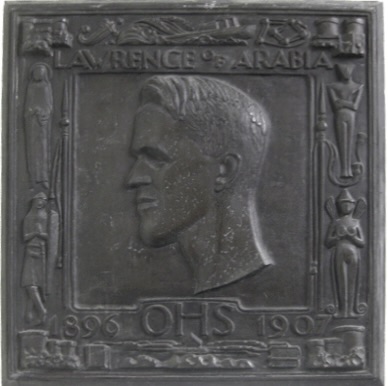
Closing remarks on the occasion of the inauguration of the plaque in memory of Lawrence of Arabia by Winston Churchill on 3 October 1936

My task this morning is an easy one. It is on behalf of the Governors of the School to accept charge of this memorial, which I do with a feeling that we of the old School can be proud to remember amongst the names of its scholars that of T.E. Lawrence. We are chiefly concerned at this moment with the address which Mr. Winston Churchill has delivered to us, and the honour he has done us in coming to perform the ceremony we have witnessed this morning.

Mr. Winston Churchill’s address should be an incentive and inspiration to the boys of this School, and also to those who, like myself, are approaching the sere and yellow leaf, to give all the service we possibly can to our fellow creatures, our city, and our country. We are deeply grateful to Mr. Churchill for his services this morning, and it is for this reason that I have the greatest pleasure in proposing that a very hearty vote of thanks be accorded to him, and I ask that you show your approval in the customary manner by acclamation.

The Lawrence Memorial Plaque

This post and its companions present a full record of everything you need to know about what happened on 3 October 1936, on the school stairs leading up to the hall. All the content comes from memorial booklets published at the time.

‘October the third 1936 was a great day in the history of the School. At 11.15 a.m. the Hall, suitably decorated, was filled with the boys and guests.

Continue reading “The Lawrence Memorial Plaque”

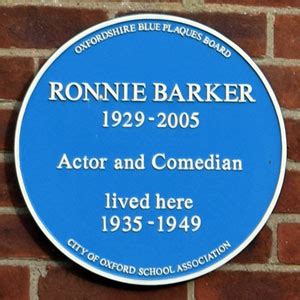
The Ronnie Barker Blue Plaque

The blue plaque to commemorate comedian Ronnie Barker – who was an Old Boy of the OHS and lived at no 23 Church Cowley Road – was inaugurated on 29 September 2012. The late Mike Chew, who was then Chairman of COSA, was invited to say a few words: 

My claim to fame is that I lived in the thirties, forties and fifties in this road at no 59, which as yet does not sport a blue plaque on the wall, and went to the same primary school as Ronnie, Donnington School in Cornwallis Road opposite the air raid shelters, and to the same grammar school, the City of Oxford High School in George Street, opposite the Ritz cinema, and I used to catch the no 3 bus with him to go to school. Being a couple of years older he was probably totally oblivious of me, and I didn’t take much notice of him – well I didn’t know he was going to be famous, did I? Tuppence ha’penny busfare to Cornmarket Street, but if you went to Iffley Turn to get on the bus it was only three ha’pence. 

Today, as Chairman, I am representing the City of Oxford School Association, which has donated the plaque. I am pleased to see a number of the committee here and indeed some ordinary members of the Association, who might be classed as plebs. Our school was closed in 1966 and we became part of Oxford School along with Southfield School in Glanville Road. Oxford School no longer exists as such, and we re-formed our Old Boys Association some seven years ago.

It is a great privilege and honour for the Association to participate in this ceremony. Ronnie is still in the hearts of many people who remember not only his comedy series on television, but also his versatile and accomplished acting skills in various dramas. As a blue plaquist, if such a title exists, he follows in the footsteps of another illustrious Old Boy: T. E. Lawrence, Lawrence of Arabia, whose plaque is at his childhood home in 2 Polstead Road. Indeed, when Wetherspoons opened their pub next to the old school it was a toss-up whether it would be called the “Four Candles” or the “Lawrence of Arabia”. “Open all Hours” beat the “Seven Pillars of Wisdom”, seven-nil.

This ceremony is a proud moment for the City of Oxford School Association, and we are grateful to the Oxfordshire Blue Plaques Board for inviting us to participate in it.

Mike Chew, 29 September 2012

The accompanying speech by Malcolm Graham of the Oxfordshire Blue Plaques Scheme can be read here.

A T Pollard 1881 -1898

The Unfinished School History by Geoffrey Hart

Chapter 1: A Very Good Start – The Headmastership of A T Pollard

The following details on the History of the School are taken from the work of Geoffrey Hart (COSA’s first Chairman) just before he died. These cover the first years of our School until Mr Cave succeeded Mr Pollard as Headmaster.

The School opened in the autumn of 1881 with forty-six pupils with much ceremony. Many dignitaries of town, gown, county and church were present and continued celebrations with a banquet in the evening in the Town Hall.

The first headmaster was A T Pollard, He clearly did some of the teaching and there were five assistant masters, some of whom were part-time. One of the first intake, Henry Wilkins, later penned his impressions of the early days, and this appeared in the March 1924 edition of the School magazine.

The main income of the School came from fees at £4/10/- (pounds and shillings) per term. Over the next sixty years these were to rise less than fifty percent. Boys from poorer homes needed to win scholarships, of which there were few at that time, despite the promises of the town council to provide fifty free admission scholarships each year. 

In October 1881 Mr Pollard was given permission to take boarders at his house at a rate of £12 per term. The following year the Governors made provision for six admission scholarships for boys educated in public schools in the town. In the first year sixty boys from the town’s elementary schools sat the entrance examinations, so there was certainly a demand.

By 1882 the number of pupils had increased over 75% to eighty-one. The library now held 800 books. A field had been secured for football, two colleges made their cricket fields available for school use during the summer vacation. There was also a fives court and a gravelled tennis court.

The highest numbers achieved during the eighties were 115 in 1884, when the school was described as full, but then there was a decline to 96 in 1887. There was a consequent serious drop in income. There were promises of scholarships but few actually materialised.

During these early years academic successes were remarkable, both at school and university level. The School Register, covering the careers of those who were at the School between 1881 and 1925 showed, however, how much the School sought to fulfil the dual vision of the governors – academic success and social inclusivity. A survey of the Register shows a wide range of occupations of parents of the early intakes.

There were serious financial problems at this time. The estimate of £8,000 to build the School turned into an actual £10,000, and this debt plagued the School for a number of years. It was probably the reason why Headmaster Pollard stayed at the School for only six-and-a-half years. He later became Vice Master of Manchester Grammar School and finally Headmaster of the City of London School. An article written by him about his time at the School appeared some forty years later in the March 1928 edition of the school magazine.

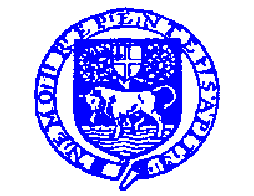
Origins of school crest and mottoes

The following text is taken from a School magazine where popular teacher Ian (Spud) Taylor explained the origins of the School Crest and Mottoes. Some text and several images are missing – which lacunae we hope to repair soon:

“Oxford High School was from its foundation the City School. The Corporation gave the land and the sum of f4,000: the rest of the cost of §10,000 for the original building (the hall, the four rooms beneath, and the two staircases) was borne by the University, various Colleges, and numerous well-wishers both within and without the University.

Continue reading “Origins of school crest and mottoes”
error: Content is protected !!