Speech by Lord Philip Hunt (1960-67).
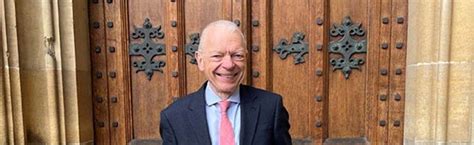
Baron Hunt of Kings Heath and illustrious Old Boy was invited to address the final gathering of COSA this July to commemorate the 60th and therefore Diamond Anniversary of the closure of the school in July 1966. This is what he had to say:
Introduction
Thanks Tim [Pocock, chair of COSA], and what a pleasure it is to speak at this excellent farewell lunch.
Isn’t it remarkable that 60 years after the merger of the School with Southfields School – 60 years ago! – we are gathered together to celebrate our life at the school, pay tribute to all who worked and studied there and keep alive so many memories on this valedictory occasion of the diamond anniversary reunion lunch. So, a big thanks, to Tim, Alan [Trinder], Ian [Lamb] and the Committee for organising this wonderful event and for all that you and your predecessors have done to maintain COSA in such good health, keeping us all updated and preserving memories of the school and bring it to a fitting end. Also, a huge thanks to Colin Hicks for the splendid job he has done on re-building the website. We should also remember Mike Chew who did so much for the association and I’d also like to pay tribute to Peter Hills who was the COSA chairman for 8 years and subsequently President and newsletter editor, until he died in September 2024. I am delighted his widow, Jane is here at the lunch, and I wanted her to know how much Peter was appreciated.
What a year 1966 was:
• The closure of the school
• England won the World Cup
• Harold Wilson won a landslide general election for Labour. If we had been in the final today, I would have said that only under Labour can we win the World cup!!! But…….. (I thought that would go down well!)
• Staying with football, some things never change. Oxford United ended the 1965/66 season in 14th place in what was then League division 3. Alas they are right back in its equivalent League 1 next season having been relegated from the Championship. I suppose that one of the joys of supporting Oxford is that it enabled me at a young age to come to terms with the disappointments of life, week after week after week!
Thanks also to Tim for his very kind introduction. I must say it felt a bit like a preview of my obituary. And I’m afraid at our age, we tend to think rather more about obituaries than we would like!
My School Record
I did wonder what my obituary would say about my school career. Given most obituaries are pretty generous, the most I could hope for is that I had: “ an undistinguished school career.”
After my mother’s death I came across some of my old school reports which unaccountably she had kept!
My first report in 1960 in form 1b set the pattern for the next 5 years:
• History – moderate only
• Religious knowledge – slumped very badly
• French – slow
And those were the more positive ones as I was placed 26th out of 29 pupils! Mr Ian Taylor, my form master concluded: “He will find himself too far behind to catch up if he fails to press forward next term” The formidable Headmaster, Mr F.C Lay warned: “He must not go downhill without a struggle”
Alas by Spring Term, I had struggled but gone downhill as well:
• Geography – poor from Mr Rowlands
• Latin – slow progress from Mr Lee
Form Master, Mr Taylor concluded I was losing ground and Mr Lay in a morale boosting message said: “This is not good enough”.
By the third year, my progress was still slow and was placed 22nd out of 24, and the fourth form was little better. Form Master, Harold Rexworthy concluded: “ He is steadily moving down the form. He really needs to take hold of himself”. By then kindly Mr Bodey had become Headmaster, His message was the same, though as the Autumn Term Report in 1963 brought this encouraging message: “Hard work is the remedy.” Quite!!
My parents were in awe of the masters and traumatised by this. How I dreaded the termly reports and their reaction. I somehow scraped 4 ‘O’ levels and got into the sixth form by the skin of my teeth. That wouldn’t be allowed now. I’d still be sitting GCSE maths year after year. Fortunately, in the sixth form, I benefited from inspired teaching by History teacher, David Walker and Economics teacher, Colin Rummings who mostly wanted to talk about Leeds United- a revelation in a rugby playing school. I met Colin a few years before his death and he was as charming and erudite as ever.
Memories
Despite my academic challenges, I still have some very fond memories:
The Tuck shop: Mars bars and coca cola every day! Wonderful. Wouldn’t be allowed today!
Woodwork at South Oxford School where the kindly teachers were remarkably tolerant of my impractical nature
Prize Giving in the town hall; not that I won any prize, but we always got given a half day’s holiday
And going to the pub at lunchtime in the Sixth Form for a half pint and bar billiards. Actually, that was in my one year at Oxford School- and it’s all I can remember about the new school!
I wasn’t quite so fond of Saturday morning school, nor ending up in form 2S the lower streamed science class as opposed to the more prestigious Latin class. By the way, hands up who was in the Latin class!
Nor the cross country runs we were made to do but full of admiration for two of my classmates who usually sped off to hide behind some trees for a few fags and waited till we all came back. They were usually safe, as Mr Dixon the Sports Master preferred to stay in the warmth of the changing rooms. One day, though he did a check halfway thru the run and retribution soon followed.
School History
Remarkable isn’t it that we are meeting 148 years since the idea of a school for was proposed in 1878 by Thomas Hill Green, Professor of Moral Philosophy at Oxford University. His ambition was to complete a ladder of learning for boys in Oxford from elementary school to university. A public meeting was held in the Town Hall on Jan 30, 1878. Presided over by the Mayor and attended by the Vice Chancellor, the Bishop of Oxford and other luminaries. It was clearly effective with funding for the school immediately following. The City Council promised £4,000, the high-class grocery store in Cornmarket St – Grimbley Hughes, which some of us remember – gave £300, with the Mayor stomping up £100. The Oxford Chronicle for 11 October 1879 set out plans for the proposed school which was to be built from the designs of Mr T.G. Jackson in George St and with stone from the old City Gaol. That figures!
The school opened in 1881 with 47 pupils. So, a mere 3 years from concept to fruition. Would that we could do that today! Does HS2 come to mind?
Highlights of School Events
There are many highlights of the school throughout its history, but I would point to three:
First war service: The number of old boys serving in the 1st world war was over 580, a remarkable number given the small size of the school. The school plaque records the names of those who were killed. In the Second World War many distinguished themselves as well. Over 600 served with 81 losing their lives. At this valedictory event, we should remember them.
T E Lawrence: We should certainly remember TE Lawrence too. He is the school’s most famous Old Boy. Whilst his reputation has ebbed and flowed over the years, do not underestimate what he achieved following his posting to Hejaz, in modern Saudi Arabia, to work with the Hashemite forces during the First World War. Lawrence acted as liaison officer between the British government and the Arab tribes aimed at rallying the Arabs against the ruling Ottoman Empire and breaking the deadlock in the war in the Middle East. During the resulting Arab Revolt, guerrilla attacks against the Ottoman Empire were co-ordinated with wider British strategy. Lawrence believed that this would be the foundation of an independent Arab state after the First World War.
Unbeknown to him, the British and French governments had already secretly agreed they would carve up the Middle East between them in 1916. I do wonder if the Middle East would have enjoyed a rather more stable time over the ensuing 100 years if Lawrence had been able to pull it off. Significantly, in 1921, Winston Churchill when Colonial Secretary chose Lawrence as his adviser. And, it was to Winston Churchill that the school turned to unveil the plaque in memory of Lawrence of Arabia in 1936. Churchill helped raise the funds to do it as well. His tribute to Lawrence was as eloquent as you would expect.
He ended his peroration with the following words: “ King George the Fifth wrote to Lawrence’s brother that his name will live on in history.” And Churchill concluded by this: “Can we doubt that that this is true. It will live in English letters, it will live in the traditions of the Royal Air Force, it will live in the annals of war and the legends of Arabia, it will also live here in his old school for ever proclaimed and honoured by the monument we have today unveiled.”
I thought Churchill’s remarks 3 years before the start of the Second World War were particularly prescient when in paying tribute to Lawrence’s genius he said: “…..in these days dangers and difficulties gather upon Britain and her empire ……we are also conscious of a lack of outstanding figures with which to overcome them.” At that point, Churchill was in the wilderness, the Chamberlain appeasement period still to come, and I have no doubt that Churchill saw himself as that outstanding figure.
Other Old Boys
Who else of notable old boys should we remember?
Well, there is my distinguished colleague and scientist Lord Krebbs; then we had a Judge, Ian; 2 Bishops and an Archdeacon; Heinz Wolff, of course, scientist and TV presenter of the Great Egg Race; the poet John Drinkwater – and many more.
But I would mark out Ronnie Barker: a brilliant comedian who I shall always remember for his part in the Class Sketch first broadcast on The Frost Report on 7 April 1966 alongside John Cleese and Ronnie Corbett. Cleese, tall and patrician in a slim-cut suit and bowler hat, represents the upper class; Barker, of average height, in loose-cut suit and homburg hat, the middle class, and Corbett, short in stature, in workman’s jacket, scarf, and flat cap then –
John Cleese turning to Barker: “ I look down on him because I am upper class.” Ronnie Barker turning to John Cleese: “ I look up to him because he is upper class, but I look down on him [pointing to Corbett] because he is lower class. I am middle class.” Ronnie Corbett (Lower Class): “I look up to them both. Because I am lower class, I know my place.”
Has it changed much? Hum……There were shades of that at the school, too.
Magdalen College School
The masters believed that whilst we were a cut above secondary modern schoolboys, we weren’t quite up to the mark of boys who went to MCS! Mind you, I have the distinct impression that at the last cricket match ever played against them, the school beat MCS. The smile on Mr Bodey’s face as he told the school assembly was a joy to behold.
Conclusion
So, there you have it! When I met Ian a few weeks ago, he remarked what a lucky generation many of us were. So true. Higher education expanded hugely in the 1960 and many of us become the first in our families to go to university. No loans at exorbitant interest rates; no tuition fees but maintenance grants which landed through the door every term.
Many of us were part of the Swinging Sixties. And even if we missed out on sex, drugs and rock and roll, or some of it, we were part of the transformation of the UK into a new world full of social freedom, hope and promise.
Add to that mostly secure jobs and generous pensions, little wonder that our children and grandchildren are a mite critical of the generous benefits we now get including free bus travel, and the triple pensions lock.
Alan Milburn’s seminal report a few weeks ago set out the stark challenges facing young people today.
Not just AI and student debt and housing challenges, but nearly 1 million young people aged 16 – 24 not in education, employment or training. And facing poor outcomes in health and life.
We can’t write these young people off and there are still some wonderful opportunities for motivated young people. Education is the bridge between childhood, and the world of work and educational qualifications become ever more essential.
I certainly give thanks for my own education and the platform it gave me for later life.
Today certainly marks the end of an era. Whatever our experiences at school, let us take a moment to remember out times there, to reflect on all who were educated over its 85 years; give thanks to the teachers and other staff for their dedication and to reflect on the foundations it laid on us for the life ahead.
© 2026 Philip Hunt, Baron Hunt of Kings Heath
(2,225 words, 17.11 Minutes)